Browse

Log in / Register
 Share
Share
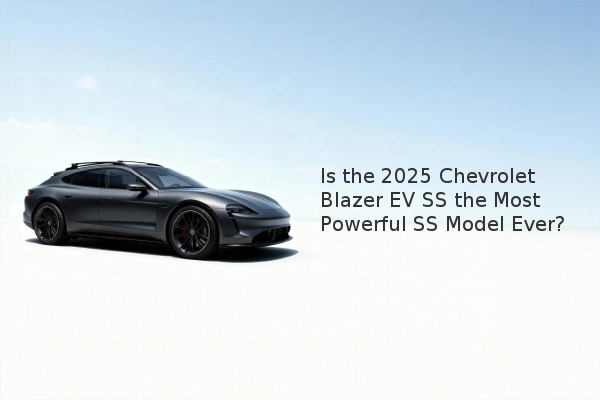
The 2025 Chevrolet Blazer EV SS, with a confirmed 615 horsepower and 650 lb-ft of torque, is not only the quickest SS model ever built but also a strategic move to re-establish the performance badge's credibility in the electric era.
The SS, or Super Sport, designation on a Chevrolet has historically signaled a high-performance variant. With the discontinuation of the Camaro, there was a risk of the badge losing its significance. However, the 2025 Blazer EV SS is engineered to be the most potent expression of SS yet. Chevrolet has revised its initial power figures upward, now confirming an output that matches the upcoming Cadillac Lyriq-V. This all-electric SUV claims a staggering 0-60 mph time of just 3.4 seconds when using its Wide Open Watts mode, a temporary performance boost feature. With a starting price of $61,995, including destination, it positions itself as a formidable performance EV.
The credentials of the Blazer EV SS extend far beyond its headline power figures. To earn the SS badge, Chevrolet has equipped it with a comprehensive performance package. This includes a more aggressively tuned suspension for better handling, high-performance Brembo brakes for confident stopping power, and standard 22-inch wheels that can be fitted with summer performance tires. Underpinning it all is a larger 102-kilowatt-hour (kWh) battery pack compared to the 85-kWh unit in other Blazer EV trims. For context, a kilowatt-hour (kWh) is the unit of energy used to measure an EV's battery capacity, similar to how gallons measure fuel; a higher kWh generally indicates a potential for longer driving range.
With 615 hp and 650 lb-ft of torque, the Blazer EV SS enters a competitive segment of high-performance electric SUVs. The following table provides a quick comparison of key performance metrics against some notable rivals, based on available data.
| Model | Horsepower | Torque (lb-ft) | 0-60 mph Claimed Time |
|---|---|---|---|
| 2025 Chevrolet Blazer EV SS | 615 hp | 650 lb-ft | 3.4 seconds |
| Ford Mustang Mach-E GT | 480 hp | 634 lb-ft | 3.8 seconds |
| Tesla Model Y Performance | 456 hp | 545 lb-ft | 3.5 seconds |
| Kia EV6 GT | 576 hp | 545 lb-ft | 3.4 seconds |
As the table illustrates, the Blazer EV SS stands out with its class-leading horsepower, making it one of the quickest options available. Its acceleration is on par with the best in the segment, fulfilling the promise of the SS badge.
Beyond pure speed, the Blazer EV SS is equipped as a premium family vehicle. It comes standard with GM's hands-free Super Cruise system for compatible highways, a significant convenience feature for long-distance travel. The interior includes heated and ventilated front seats, heated rear seats, and an eight-speaker Bose sound system. While an official EPA-estimated range for the SS model has not been released, its larger 102-kWh battery suggests it should be competitive. Based on our assessment experience, we expect it to be close to the 283-mile estimate for other all-wheel-drive Blazer EVs. Furthermore, the SS supports faster DC fast charging at up to 190 kilowatts, allowing for quicker battery top-ups on road trips compared to the 150-kW capability of other trims.
The Blazer EV SS commands a $16,000 premium over the base Blazer EV LT. This price is justified by the extensive performance upgrades, the larger battery, the advanced Super Cruise technology, and the premium interior features. For driving enthusiasts seeking a practical SUV with uncompromising electric performance, the Blazer EV SS presents a compelling package. It successfully translates the Super Sport legacy into an electric vehicle without dilution.
For potential buyers, the key takeaways are its class-leading horsepower, sub-3.5-second 0-60 mph acceleration, and the inclusion of advanced tech like Super Cruise. While the final range figure is pending, its performance credentials are undeniable, making it a serious contender for the title of the most powerful SS ever.