Browse

Log in / Register
 Share

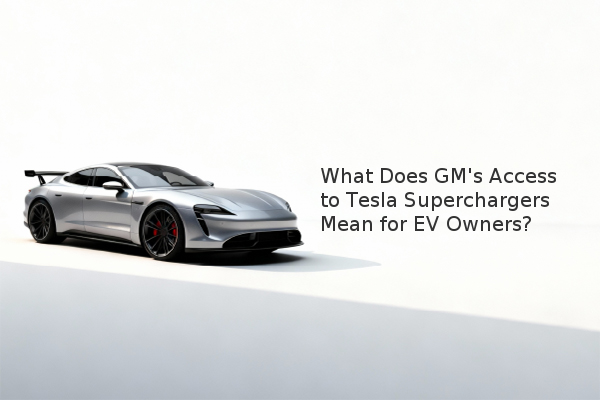
General Motors EV owners can now use Tesla's vast Supercharger network, requiring only a $225 adapter to access over 17,800 fast-charging plugs. This move, part of a broader industry shift to the Tesla-developed North American Charging Standard (NACS), significantly expands practical charging options for GM drivers and marks a pivotal moment in the standardization of EV infrastructure in the United States.
How Can Current GM EV Owners Start Using Tesla Superchargers? For owners of existing GM electric vehicles like the Chevrolet Bolt EV, Bolt EUV, GMC Hummer EV, and Cadillac Lyriq, gaining access is straightforward. The primary requirement is a physical adapter. Tesla chargers use a proprietary connector called NACS, while most non-Tesla EVs, including those from GM, have historically used the Combined Charging System (CCS) plug. The adapter acts as a bridge, allowing a CCS vehicle to connect to a NACS charger. GM is making this adapter available to owners for $225. Beyond the hardware, the process is seamless because Tesla's Superchargers are now integrated directly into GM's existing vehicle app. This means owners can locate, navigate to, and pay for charging sessions without needing a separate Tesla account or app, using the interface they are already familiar with.
Why Is Access to Tesla's Supercharger Network a Game-Changer? The significance lies in the scale and reliability of the network. Prior to this agreement, GM EV owners relied on a mix of public CCS networks, which can be inconsistent in terms of functionality and charging speed. Tesla's Supercharger network is widely regarded as the most extensive and reliable public DC fast-charging system in the country. DC fast charging is crucial for long-distance travel, as it can add hundreds of miles of range in approximately 30-40 minutes, much faster than Level 2 chargers commonly found at workplaces or public parking spots. Gaining immediate access to over 17,800 additional fast-charging plugs effectively doubles the convenient charging options for GM customers overnight, alleviating a primary concern for potential EV buyers: range anxiety.
What Does the Shift to NACS Mean for the Future of EV Charging? GM's announcement is part of a larger industry-wide transition. Following Tesla's decision to open its network, nearly every major automaker selling EVs in the U.S., including Ford, Rivian, and Volvo, has signed agreements to adopt the NACS port. This indicates a move toward a universal charging standard in North America, similar to how gasoline nozzles are standardized at fuel stations. For consumers, this promises a simpler, more reliable charging experience. Future GM EVs, starting in 2025, will be built with the NACS port natively, eliminating the need for an adapter. This consolidation is expected to accelerate the adoption of EVs by making public charging less fragmented and more user-friendly.
Based on our assessment of the evolving EV landscape, the key takeaway is immediate and tangible benefits for current owners. The ability to use Tesla's reliable Supercharger network with a simple adapter is a significant upgrade. For those considering an EV, this development makes existing GM models more appealing by instantly expanding their fast-charging capabilities. The broader industry shift toward NACS is a positive sign that the EV infrastructure is maturing rapidly, moving toward a more unified and convenient system for all electric vehicle owners.