Browse

Log in / Register
 Share
Share
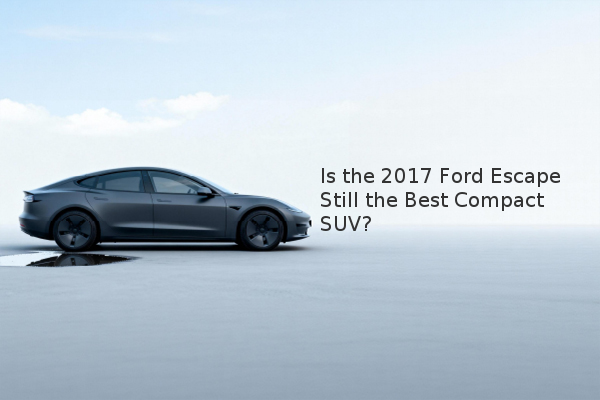
Based on our comprehensive assessment of the segment, the 2017 Ford Escape faces stiff competition and is no longer the undisputed leader in the compact SUV category. While it retains strengths like engaging driving dynamics, newer rivals from Honda, Mazda, and Chevrolet now offer superior fuel economy, more refined interiors, and advanced standard safety features. This head-to-head comparison pits the Escape against key competitors—the 2017 Honda CR-V, 2017 Mazda CX-5, 2018 Chevrolet Equinox, 2017.5 Nissan Rogue, 2017 Jeep Compass, and 2018 Volkswagen Tiguan—to determine the current champion for your money.
When comparing modern compact SUVs, shoppers typically prioritize a blend of practicality, fuel efficiency, technology, safety, and overall value. These vehicles are designed to be versatile family haulers, so cargo space, passenger comfort, and low running costs are paramount. Additionally, features like Apple CarPlay/Android Auto integration and a comprehensive suite of driver-assistance technologies have become significant differentiators. Our evaluation focuses on these real-world concerns to guide your purchasing decision.
The 2017 Ford Escape's primary advantage lies in its chassis tuning, which provides a more responsive and car-like driving experience compared to some softer-riding competitors. Its turbocharged engine options, particularly the 2.0L EcoBoost, deliver strong acceleration (0-60 mph in approximately 6.5 seconds). However, its cabin materials feel dated next to the Mazda CX-5 and Honda CR-V, and its EPA-estimated fuel economy of 23 mpg combined (for the 2.0L AWD model) trails the class leaders. The infotainment system, SYNC 3, is competent but the standard screen is smaller than what rivals offer.
| Model (2017/2018) | Notable Strength | Key Weakness | Starting Price (Then, Used Varies) |
|---|---|---|---|
| Honda CR-V | Spacious interior, excellent fuel economy | Less engaging to drive | ~$25,000 |
| Mazda CX-5 | Premium interior, best-in-class driving dynamics | Tighter rear-seat space | ~$25,000 |
| Chevrolet Equinox | Roomy cabin, smooth ride | Dull handling | ~$25,500 |
| Nissan Rogue | Comfortable "Zero Gravity" seats, good value | Underpowered engine | ~$25,000 |
| Jeep Compass | Standard all-wheel drive, off-road capability | Poor fuel economy, slow acceleration | ~$22,000 |
| Volkswagen Tiguan | Spacious, high-quality interior | Underpowered base engine | ~$26,000 |
The 2017 Honda CR-V emerges as the most complete package and the new front-runner. It excels in nearly every critical area: it boasts best-in-class cargo space, an exceptionally fuel-efficient and powerful 1.5L turbocharged engine (achieving up to 30 mpg combined), and a quiet, well-built cabin. Furthermore, the Honda Sensing® suite of safety and driver-assist features became widely available, giving it a significant edge in active safety. The 2017 Mazda CX-5 is a close second for drivers who prioritize style and handling, offering a remarkably upscale interior and the most engaging drive in the segment.
The compact SUV segment has evolved dramatically, and the 2017 Ford Escape, while still a competent vehicle, has been surpassed. For most buyers seeking the ideal balance of space, efficiency, reliability, and resale value, the 2017 Honda CR-V is the new benchmark. Driving enthusiasts who are willing to sacrifice some rear-seat room will find the 2017 Mazda CX-5 more rewarding.
For used car shoppers in the current market, your best choice depends on your priorities:
Always obtain a pre-purchase inspection from a trusted mechanic before finalizing any used vehicle transaction.