Browse

Log in / Register
 Share
Share
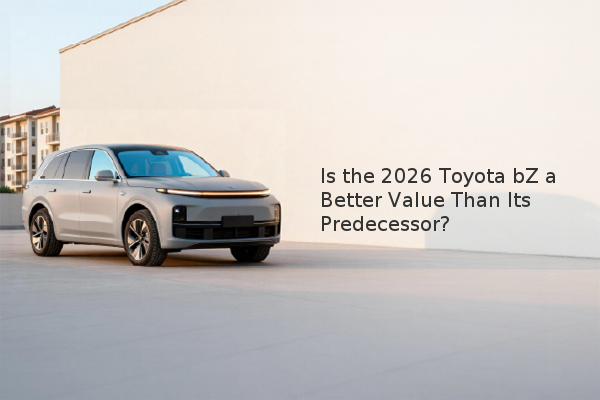
The 2026 Toyota bZ emerges as a significantly refined and more compelling electric SUV, offering a lower starting price, more power in key trims, and faster charging, though its value proposition depends heavily on the chosen battery pack.
Toyota has relaunched its all-electric SUV for the 2026 model year with a new strategy: simplifying the name to just "bZ" and restructuring its trim levels to offer a clearer choice between affordability and maximum range. While the entry price has dropped to $36,350, making it one of the most affordable EVs on the market, the most significant upgrades in power and range are reserved for higher trims. Based on our assessment experience, the 2026 bZ's most compelling package is the XLE FWD Plus trim, which offers the best balance of price, range, and performance.
The 2026 model year brings a host of revisions aimed at addressing criticisms of the previous bZ4X. The most notable changes include a more powerful standard motor for trims with the larger battery, a significant reduction in starting price, and crucial charging improvements.
The SUV now features a standard North American Charging Standard (NACS) port, allowing direct access to Tesla's extensive Supercharger network. Furthermore, the onboard charger for Level 2 charging (the type commonly installed at homes and public stations) has been upgraded from 7.6 kW to 11 kW, which can significantly reduce charging time on such equipment. For quick stops, the bZ supports DC fast charging at up to 150 kW, with Toyota estimating a charge from 10% to 80% in approximately 30 minutes.
The 2026 bZ is available with two battery packs and two drive configurations, creating a clear hierarchy for shoppers prioritizing either cost or capability. The following table breaks down the key specifications for each variant:
| Trim Level | Drivetrain | Horsepower | Battery Size | Estimated Range |
|---|---|---|---|---|
| XLE FWD | Front-Wheel Drive (FWD) | 168 hp | 57.7 kWh | 236 miles |
| XLE FWD Plus | Front-Wheel Drive (FWD) | 221 hp | 74.7 kWh | 314 miles |
| Limited FWD | Front-Wheel Drive (FWD) | 221 hp | 74.7 kWh | 299 miles |
| XLE AWD | All-Wheel Drive (AWD) | 338 hp | 74.7 kWh | 288 miles |
| Limited AWD | All-Wheel Drive (AWD) | 338 hp | 74.7 kWh | 278 miles |
The XLE FWD Plus trim stands out as the sweet spot, offering a substantial 314-mile range estimate—a significant increase over the base model—for a price of $39,350. The drop in range for the Limited trims is typically due to larger wheels and additional features that increase weight and reduce aerodynamic efficiency. The AWD system, which adds a second electric motor, provides enhanced traction and power but does result in a lower estimated range compared to its FWD counterpart.
Toyota has equipped the bZ generously with standard tech and comfort features. Every trim includes a large 14-inch touchscreen, wireless Apple CarPlay and Android Auto, a heated steering wheel, heated front seats, and dual-zone climate control. A critical standard feature for EV efficiency in colder climates is a heat pump, which helps conserve battery power by efficiently managing cabin heat.
Standard safety is comprehensive, thanks to the Toyota Safety Sense 3.0 suite. This includes:
The Limited trim adds luxury-oriented features like a panoramic glass roof, ventilated front seats, heated rear seats, and an available JBL audio system. It also offers optional advanced driver-assistance features such as an automated parking system and a 360-degree camera.
For shoppers seeking an affordable, feature-rich electric SUV from a established manufacturer, the 2026 Toyota bZ presents a strong case. The lower entry price increases its accessibility, while the improvements to charging and performance address key EV ownership concerns.
However, your decision should hinge on your budget and range needs.
The 2026 bZ's access to the Tesla Supercharger network is a major advantage, greatly expanding the practicality of long-distance travel. When compared to rivals like the Chevrolet Equinox EV and Nissan Leaf, the bZ's combination of Toyota's reliability, a comprehensive standard features list, and a competitive price makes it a compelling option in the growing affordable EV segment.