Browse

Log in / Register
 Share
Share
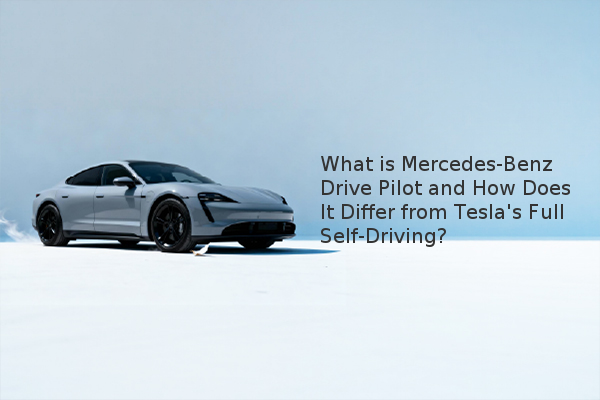
Mercedes-Benz Drive Pilot is the first federally approved Level 3 conditional automated driving system available in the United States, representing a significant technological leap beyond the Level 2 driver-assist systems like Tesla's Full Self-Driving (FSD) and GM's Super Cruise. Available initially on the 2024 EQS sedan and S-Class in California and Nevada, this system legally allows the driver to disengage from the driving task during specific conditions, such as heavy traffic on certain highways. This analysis, based on a firsthand experience with the system, details how it works, its key limitations, and the crucial distinction between Level 2 and Level 3 autonomy.
The most critical distinction lies in legal responsibility and required driver engagement. A Level 2 system is an advanced driver-assistance system (ADAS). This means features like adaptive cruise control and lane centering assist the driver, who must remain fully attentive, with hands on or ready to take the wheel. Systems like Tesla FSD, GM Super Cruise, and Ford BlueCruise are all classified as Level 2.
A Level 3 system, also known as conditional driving automation, is the first tier where the vehicle itself becomes the primary operator under defined conditions. When active, the driver is permitted to engage in non-driving activities, such as watching a video or browsing the web, and is not required to monitor the road. The key caveat is that the system will prompt the driver to retake control with ample warning when it reaches its operational limits.
Drive Pilot builds upon the standard Intelligent Drive Level 2 system but incorporates a suite of redundant sensors and backup systems to achieve a higher safety standard. The system's operation is contingent on a specific set of conditions being met.
During operation, the car manages acceleration, braking, and lane-keeping within its current lane (it does not perform automated lane changes). It will continue until conditions change, such as traffic clearing, speed exceeding 40 mph, or encountering an unmapped zone.
Based on our assessment experience, the system functions with a pronounced emphasis on safety through its redundant architecture and clear operational boundaries. The vehicle provides a 10-second grace period for the driver to resume control after a takeover request. This design philosophy contrasts with approaches that push operational boundaries more aggressively.
However, safety also involves the human factor. The psychological leap from supervising a Level 2 system to trusting a Level 3 system is significant. During testing, the transition from actively monitoring the road to engaging with the car's infotainment system (like playing a quiz game) felt unnatural for an experienced driver accustomed to being responsible. This highlights that widespread comfort with this technology may evolve gradually, potentially requiring a generational shift in driver attitudes.
The primary benefit is the reclamation of time during stressful commutes. For those regularly stuck in traffic on supported routes, the ability to safely read, communicate, or relax is a tangible improvement in quality of life.
The main drawback is the current limited scope of operation and the cost. Mercedes-Benz has announced Drive Pilot will be offered as a subscription service, with the first year priced at $2,500. Its availability is initially restricted to California and Nevada due to regulatory approval.
For prospective luxury vehicle buyers in those states, Drive Pilot is a groundbreaking option that offers a genuine glimpse into the future of automated driving. However, its high cost and narrow operational window mean it is currently a niche feature rather than a universal solution. The system works as intended, but driver trust will be the ultimate determinant of its success.