Browse

Log in / Register
 Share
Share
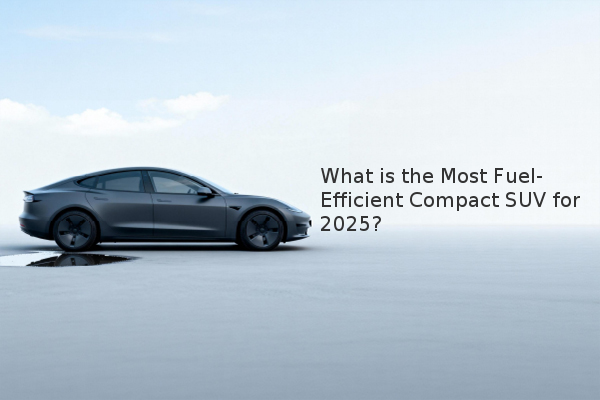
The 2024 Toyota RAV4 Hybrid is the most fuel-efficient compact SUV based on real-world testing, achieving 37.9 mpg on a 250-mile road trip. In a comprehensive challenge comparing seven popular models, hybrid powertrains dominated the top spots, but even non-hybrid options like the Subaru Forester and Nissan Rogue delivered impressive efficiency exceeding 30 mpg, proving that shoppers have excellent choices for saving money on gas.
To ensure fair and realistic results, we conducted a controlled, real-world fuel-economy drive on a 250-mile route through the Hill Country outside Austin, Texas. All vehicles were model-year 2025 except for the 2024 Toyota RAV4 (which carries over unchanged). Each SUV was equipped with all-wheel drive and filled with premium gasoline.
Our testing methodology was designed to mimic typical driving conditions:
The hierarchy of fuel efficiency was clear, with hybrids taking the podium. The final results, from highest to lowest observed mpg, are presented in the table below.
| SUV Model & Powertrain | Real-World Tested MPG |
|---|---|
| 2024 Toyota RAV4 Hybrid XSE AWD | 37.9 mpg |
| 2025 Honda CR-V Hybrid Sport Touring AWD | 36.5 mpg |
| 2025 Hyundai Tucson Hybrid Limited AWD | 33.6 mpg |
| 2025 Subaru Forester Sport AWD (Gas-only) | 31.2 mpg |
| 2025 Nissan Rogue Platinum AWD (Gas-only) | 30.8 mpg |
| 2025 Mazda CX-5 2.5 Turbo Signature AWD (Gas-only) | 28.1 mpg |
| 2025 Chevrolet Equinox Activ AWD (Gas-only) | 27.6 mpg |
An interesting finding is that the gap between the least-efficient hybrid (Tucson) and the most-efficient gas-only SUV (Forester) was relatively small. Furthermore, five out of the seven SUVs tested achieved more than 30 mpg, a strong result for the class.
The results highlight the direct impact of powertrain technology and vehicle configuration on fuel consumption. The superior efficiency of hybrid powertrains is due to their ability to use an electric motor at low speeds, recapture energy during braking (regenerative braking), and occasionally allow the gas engine to shut off entirely.
The vehicles at the lower end of the results have specific, justifiable reasons for their numbers:
It's also worth noting that our route featured higher-speed roads, which typically favors traditional gas engines over hybrids. This suggests that in city driving, the hybrid models might demonstrate an even greater efficiency advantage.
Based on our assessment experience, the key takeaway is that a hybrid powertrain remains the most effective way to maximize fuel savings in the compact SUV segment. However, the strong showing of several gas-only models means you don't necessarily have to choose a hybrid to get excellent mileage.
For the highest efficiency: The Toyota RAV4 Hybrid and Honda CR-V Hybrid are the clear leaders. The RAV4's victory is notable given its hybrid system is the oldest in the test, a testament to its refined design.
For a balance of efficiency and capability: The Subaru Forester and Nissan Rogue offer standard all-wheel drive and utility without the hybrid price premium, while still delivering over 30 mpg.
For performance or off-road styling: The Mazda CX-5 Turbo and Chevrolet Equinox Activ provide compelling reasons for their lower mpg figures, catering to specific buyer priorities.
The encouraging conclusion for shoppers is that even the last-place finisher in this efficient group achieved a respectable 27.6 mpg. When choosing your next compact SUV, prioritize a test drive to see which vehicle's blend of efficiency, performance, and features best aligns with your needs.