Browse

Log in / Register
 Share

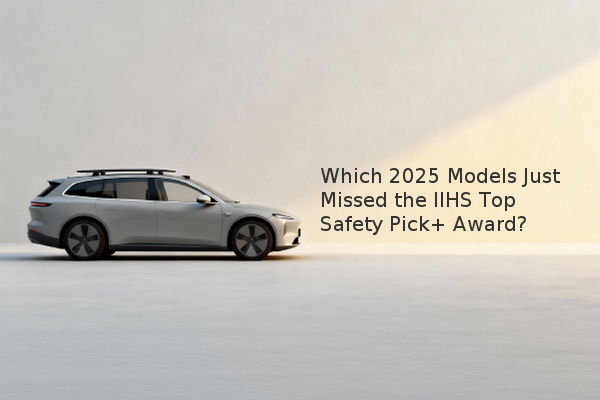
The latest round of Insurance Institute for Highway Safety (IIHS) crash testing yielded mixed results, with the 2025 Kia Sorento improving but still falling short of the top award, while the Nissan Altima and Honda's new electric SUVs also missed the mark due to specific safety shortcomings.
When shopping for a new car, a Top Safety Pick+ award from the IIHS is one of the most trusted indicators of a vehicle's protective capabilities. The latest tests, however, show that earning this highest honor is a significant challenge, even for redesigned models and new electric vehicles. This analysis breaks down the recent IIHS evaluations for the 2025 Kia Sorento, Nissan Altima, Honda Prologue, and Acura ZDX, explaining exactly where each vehicle succeeded and where it fell short.
To understand the results, it's essential to know the rigorous criteria set by the IIHS, a nonprofit organization funded by auto insurers. The ratings are on a four-point scale: Poor, Marginal, Acceptable, and Good.
To qualify for the base Top Safety Pick award, a vehicle must earn "Good" ratings in all six of the following crash tests:
For the coveted Top Safety Pick+ award, vehicles must meet all the above criteria plus earn an "Acceptable" or "Good" rating in the updated moderate overlap frontal test, which now includes a second dummy in the rear seat behind the driver to assess backseat safety. This is the new, stricter requirement that has proven difficult for many models.
The 2025 Kia Sorento mid-size SUV was back for redemption after missing the Top Safety Pick+ award last year. Kia made a specific change to address the previous shortcoming: modifying the rear seat belts to better control the dummy's movement in the updated moderate overlap front test.
Based on our assessment of the IIHS data, the improvement was not enough. The revised seat belts still allowed too much movement, resulting in a "Marginal" score in that critical test. Because a Top Safety Pick+ requires an "Acceptable" or "Good" rating here, the Sorento was relegated to the second-tier Top Safety Pick award. It did, however, earn a "Good" rating in the pedestrian-detection test, the only vehicle in this group to do so.
The other vehicles tested in this session also failed to qualify for either award, but for different reasons.
2024-2025 Nissan Altima: The mid-size sedan was also retested with updated rear seat belts. It was consistent, but unfortunately, that consistency meant another "Marginal" rating in the updated frontal test. It also had pre-existing issues, including a "Poor" rating in the updated side impact test and a "Marginal" score for its pedestrian-avoidance system, which automatically disqualify it from award consideration.
2024 Honda Prologue & Acura ZDX: The biggest disappointments were arguably Honda's new electric vehicle duo. Both SUVs initially qualified for the highest honors in most categories. However, in the driver-side small overlap front crash test—where a vehicle hits the front corner of another vehicle or object—the dummy’s head slipped between the front and side curtain airbags. This resulted in an "Acceptable" rating, but a "Good" rating is mandatory for any award. Acura did address another issue by switching to headlights that earn a "Good" rating on ZDX models built after August 2024.
This latest round of IIHS testing highlights that a new model or a popular nameplate does not automatically guarantee top-tier safety. When evaluating a vehicle, it is crucial to dig into the specific test results on the IIHS website rather than relying solely on marketing claims.
Key takeaways for your car search:
Ultimately, the IIHS continues to raise the bar for vehicle safety, and these results provide a clear, data-driven guide for buyers prioritizing protection.